I attended QConLondon 2013 last week; what I took from the first four sessions in the Building for Clouds track was: cloud API and infrastructure automation tools have now solved most of the ‘easy’ cloud problems, but harder challenges (such as automating clusters) remain. The sessions were from Tim Savage (@timjsavage) and Zenon Hannick (@zenonhannick) on Comic Relief’s unique challenges with performance testing, Gareth Rushgrove (@garethr) on how to avoid PaaS lock-in, Stephen Nelson-Smith (@LordCope) on how to use Chef to give you ‘optionality’ with different cloud vendors, and Andrew Crump (@acrmp) and Chris Hedley (@ChristHedley) on the CloudFoundry cloud platform.
Build screens (or build monitors, or information radiators) are an important tool in helping to achieve Continuous Integration and in trapping errors early. When the number of build jobs becomes large, it can be tempting to hide ‘successful’ jobs to save space, but we found this to cause problems. I realised that people need to know the context for the red jobs if they are to take prompt action to fix failing builds, so it’s important to represent the full state of all builds by showing green jobs too.
HTTP caching is a key part of what makes the web usable, and draft standards like HTTPbis add further refinements to the existing HTTP/1.1 caching features. At WebPerfDays 2012, Mark Nottingham (@mnot) and Josh Bixby (@joshuabixby) gave some useful tips on how we can tune our web applications to take advantage of the existing and forthcoming HTTP cache features.
The WordPress.com stats helper monkeys prepared a 2012 annual report for this blog.
Here’s an excerpt:
600 people reached the top of Mt. Everest in 2012. This blog got about 10,000 views in 2012. If every person who reached the top of Mt. Everest viewed this blog, it would have taken 17 years to get that many views.
This file contains hidden or bidirectional Unicode text that may be interpreted or compiled differently than what appears below. To review, open the file in an editor that reveals hidden Unicode characters.
Learn more about bidirectional Unicode characters
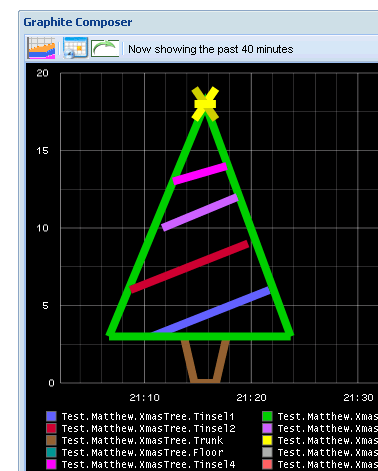
I’d love to hear or see any suggestions for improvements to the script. Candles? Snowflakes? Reindeer?! Also, as my Ruby-fu is limited, if there are better ways of interacting with Graphite, I’d love the hear about them (I tried and failed to get activesupport to work on my machine, for example).

 Matthew Skelton