HTTP caching is a key part of what makes the web usable, and draft standards like HTTPbis add further refinements to the existing HTTP/1.1 caching features. At WebPerfDays 2012, Mark Nottingham (@mnot) and Josh Bixby (@joshuabixby) gave some useful tips on how we can tune our web applications to take advantage of the existing and forthcoming HTTP cache features.
The London Continuous Delivery meetup group had its first session of 2013 on 17 Jan. We were fortunate to be able to use the offices of [my employer] thetrainline.com in central London, and doubly fortunate to be joined by Andy Hawkins from Opscode, who ran what turned out to be a brave demo showing how Chef can work with CI tools to provision EC2 instances.
I have been writing technical blog posts since 2002, but decided in late 2011 to change my writing style after undertaking various web content and SEO projects for clients and seeing the effects of good (and bad) writing. After 14 months of applying my new blogging ‘rules’, I am pleased with the results: over 11,000 page impressions between December 2011 and today (January 12th, 2013), which represents significantly higher traffic than previously; monthly impressions are increasing at a higher rate, too, which suggests that the content is useful. So here are my ‘rules’ for writing a good technical blog post.
The WordPress.com stats helper monkeys prepared a 2012 annual report for this blog.
Here’s an excerpt:
600 people reached the top of Mt. Everest in 2012. This blog got about 10,000 views in 2012. If every person who reached the top of Mt. Everest viewed this blog, it would have taken 17 years to get that many views.
This file contains hidden or bidirectional Unicode text that may be interpreted or compiled differently than what appears below. To review, open the file in an editor that reveals hidden Unicode characters.
Learn more about bidirectional Unicode characters
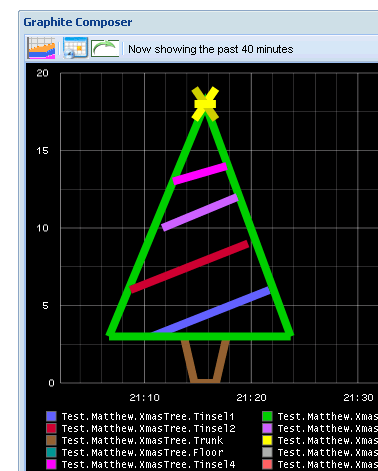
I’d love to hear or see any suggestions for improvements to the script. Candles? Snowflakes? Reindeer?! Also, as my Ruby-fu is limited, if there are better ways of interacting with Graphite, I’d love the hear about them (I tried and failed to get activesupport to work on my machine, for example).


 Matthew Skelton