Just back from the ThoughtWorks AWS training in London at Wallace Space. Great day: good pace, with some excellent discussions and lots of learning.
Improving page speed: CDN vs Squid/Varnish/nginx/mod_proxy
Too few people understand the benefit of using a caching reverse proxy server to improve web page delivery speeds, and instead go straight to a CDN solution, which can be costly and complex to administer.
Continue reading Improving page speed: CDN vs Squid/Varnish/nginx/mod_proxy
DevOps Days 2010, Hamburg
I gave a lightning talk at DevOps Days 2010 in Hamburg entitled Culture Shock – Winning People to DevOps.
To a large extent, I was of course “preaching to the converted”, but it had seemed to me (as to others) that those of us championing DevOps needed to communicate our ideas better to other stakeholders. This talk collected together several concepts, pictograms and metaphors which seemed worth sharing:
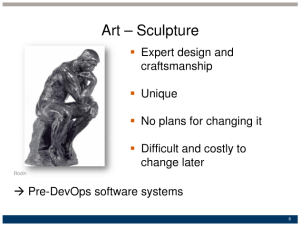
[Slides at: http://www.slideshare.net/matthewskelton/ matthew-skelton-cultureshockwinningpeopletodevops]
My thanks goes out the the conference organisers (Patrick Debois and Gildas le Nadan in particular) and everyone else for a great meeting of minds and ideas.
Use DiskPart to remove GPT partitions
The standard Windows XP GUI tools will not allow you to modify a disk which uses the GUID parition table (GPT) instead of the standard MBR. This is a particular problem if you have used an external disk in a Mac; for example, I used an external HDD as the TimeMachine backup device on a friend’s MacBook. Now that she has her own external HDD, I wanted my disk back, but Windows appears not to recognise the disk.
To the rescue comes DiskPart (courtesy of pitumbo).
DISKPART> select disk N
DISKPART> clean
DiskPart itself has a range of useful options for managing and inspecting disks, partitions and volumes. For example:

Blogger to remove Publish via FTP
As I suspected some time ago, but at a much later time than I thought, Google is finally going to switch off the “Publish via FTP” option from Blogger (http://blogger-ftp.blogspot.com/2010/01/deprecating-ftp.html, http://blogger-ftp.blogspot.com/), causing much ranting on Twitter

The FTP feature was great, in that you got all the benefits of the Blogger editor interface, but all the files were published as flat files to a custom web server. Better still, you could cajole Blogger into saving the files as PHP, thereby providing a cunning integration with flat-HTML websites, without the use of a database or blogging software installed on the server.
Apparently, this caused Blogger a great deal of headache, particularly in resolving support incidents: only .5% of active blogs used FTP for publishing (although I bet all those were “real” blogs, rather than spam or SEO-drivers).
I think this means we’ll need to install the blogging software on our servers, software such as WordPress (http://wordpress.org/). We need a mechanism which allows PHP scripts, so that the content can be embedded within the website itself, not hosted at some crummy http://blog.domain.com/ separate domain. This rules out the Google Custom Domain option.
Less than two months’ notice is not great, but hopefully we should be able to improve on Blogger anyhow.
 Matthew Skelton